
By Christopher Dill
When I published my first few books, I could keep a lot of the process in my head.
I knew where the manuscript was.
I knew which cover was the final cover.
I knew where I had uploaded the book.
I knew what description I had used.
I knew which file was the ebook and which one was the print interior.
When you’re dealing with one or two books, that can work.
Keep publishing and eventually it doesn’t.
The more books I created, the more I realized that publishing wasn’t only creating a bigger catalog.
It was creating more things to manage.
Every book came with files, covers, descriptions, formats, prices, retailer listings, metadata, and eventually audiobook files and other assets.
Then I would start another book.
And another.
At some point, relying on memory stopped being a system.
That’s probably one of the biggest things publishing more books has taught me: if I’m going to keep creating, I need systems that let me build on what I’ve already figured out instead of starting over every damn time.
The First Book Lets You Get Away With a Lot
When you’re publishing one book, disorganization can hide.
You might have the manuscript sitting in Downloads.
The cover might be on your desktop.
The paperback PDF might be in another folder.
Maybe the description is copied into a note somewhere.
You know where everything is because you just worked on it.
Then six months pass.
Now you’ve published several more books.
You need the original cover for that first title.
Which one was it?
cover-final.jpg?
cover-final2.jpg?
new-cover-final.jpg?
cover-FINAL-FINAL.jpg?
Anybody who works with digital files long enough knows exactly how stupid that can get.
The problem isn’t really the filename.
The problem is that you’re depending on your memory of a project you haven’t touched in months.
Now multiply that across a growing catalog.
That’s when organization stops being something nice to have.
It starts saving actual time.
Every Book Creates More Than a Manuscript
Before I started publishing regularly, it was easy to think of the book as the manuscript.
That’s the creative center of it, but it’s nowhere near the entire publishing package.
A finished title can eventually have:
A manuscript.
An EPUB.
A paperback interior.
A hardcover interior.
A front cover.
A full paperback wrap.
A hardcover cover.
An audiobook cover.
Audiobook files.
A retail sample.
Descriptions.
Keywords.
Categories.
Pricing information.
Promotional graphics.
Website images.
Retailer listings.
And depending on the book, there may be other assets around it too.
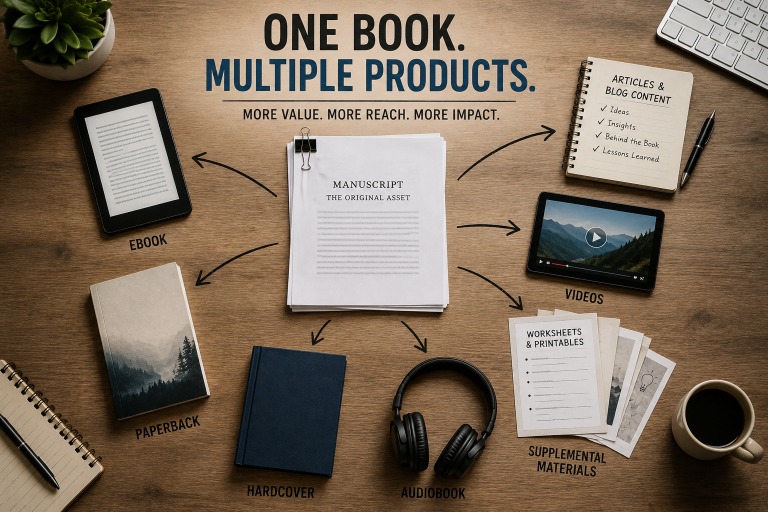
That’s part of what I explored in One Book, Multiple Products: How Indie Authors Can Get More From Every Title They Publish.
The more useful things I create from one piece of intellectual property, the more important it becomes to know what I have.
Otherwise, creating more value also creates more chaos.
I Don’t Want to Solve the Same Problem Twice
This is probably the biggest reason I care about systems.
Publishing involves a lot of little problems.
How should I format this?
What size does this cover need to be?
What information do I need for this retailer?
How did I prepare that audiobook file?
Where did I put the description?
Which version did I upload?
What settings worked last time?
Some problems genuinely are new.
But a lot of them aren’t.
If I already spent an hour figuring something out for Book 7, I don’t want to spend another hour rediscovering the exact same answer for Book 12.
That’s wasted work.
The better approach is to capture the solution when I find it.
Then the next book starts further ahead.
That’s what a good system does.
It doesn’t eliminate the work.
It keeps completed work from disappearing.
Systems Don’t Have to Be Complicated
When people hear the word system, it can sound like I’m talking about some giant corporate workflow with project-management software, color-coded dashboards, and twelve people approving every file.
I’m not.
A system can be a folder.
A naming convention.
A checklist.
A spreadsheet.
A template.
A standard way of packaging files.
A document containing the information I know I’ll need again.
The question isn’t whether the system looks impressive.
The question is whether it keeps me from having to figure out the same shit again.
If I know every completed book has its own folder and the final assets are always stored there, that’s a system.
If I know exactly where to find the EPUB six months later, the system worked.
If I have to search three computers, two cloud drives, my email, and an old conversation to find it, the system didn’t work.
Simple is fine.
Reliable is what matters.
The Final File Needs to Actually Be Final
One of the easiest ways to create confusion is keeping too many versions without knowing which one matters.
Drafts are useful while you’re working.
They’re not useful when you’re trying to upload a book six months later and can’t tell which file was actually published.
That’s why I increasingly want a clear final version of everything important.
The final manuscript.
The final print interior.
The final EPUB.
The final cover.
The final audiobook files.
That doesn’t mean deleting every previous draft.
Sometimes old versions matter.
But the published asset should be obvious.
I shouldn’t have to open four documents and compare them line by line to figure out which one I used.
That is exactly the kind of tiny problem that becomes a huge pain when multiplied across a catalog.
Save the Metadata Too
Files aren’t the only things worth preserving.
Metadata can be just as annoying to reconstruct.
Book title.
Subtitle.
Author name.
Description.
Keywords.
Categories.
ISBN information where applicable.
Pricing.
Edition information.
Retailer-specific details.
You may think:
I’ll remember that.
Maybe today.
Will you remember it after publishing six more books?
Probably not.
And even if you do remember most of it, why should you have to?
If I’ve already made the decision, I want the decision recorded somewhere.
That’s especially useful when publishing the same title in more than one place.
In Why I Publish My Books Wide Instead of Putting All My Eggs in One Basket, I talked about why I like having more than one reasonable path to readers.
The operational side of that strategy is that more distribution creates more information to manage.
If I’m going wide, organization matters even more.
More Formats Multiply the Management
The same thing happens with formats.
An ebook isn’t a paperback.
A paperback isn’t a hardcover.
An audiobook definitely isn’t any of those.
Each edition can introduce its own file requirements, covers, pricing, metadata, and distribution considerations.
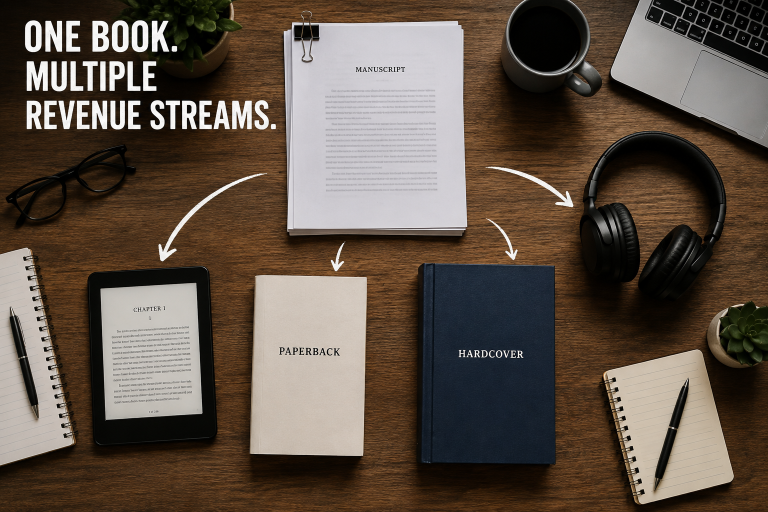
That’s one reason One Book, Multiple Revenue Streams: Why I Publish in Every Format I Can and this article belong together.
I like giving a book multiple reasonable opportunities to earn.
But every opportunity creates something else I have to keep track of.
If I create an audiobook, now I have audio assets.
If I create a hardcover, now I have another cover and interior.
If I distribute somewhere else, now I have another listing.
Expansion creates opportunity.
Systems keep the opportunity from turning into a mess.
Templates Save More Than Time
Templates are one of those things that don’t seem important until you realize how often you’re rebuilding the same structure.
If I already know how I want something formatted, I don’t need to reinvent it.
If I already know the information I need to collect for a new book, I don’t need to remember the list every time.
If I already have a publishing checklist, I don’t need to hope I remembered every step.
A template also reduces decisions.
That’s underrated.
Every unnecessary decision takes a little bit of attention.
Do that dozens of times and suddenly you’re tired from a process that shouldn’t have required much thought.
I would rather save my decision-making energy for the parts that actually need creativity.
The story.
The argument.
The cover concept.
The title.
The things that make this book different.
The repetitive pieces should become easier every time I do them.
A Checklist Protects Me From Myself
I’m capable of forgetting things.
Everybody is.
Especially when you’re doing several things at once.
You can be thinking about the next book while finishing the current one.
You can be uploading an ebook while checking a paperback.
You can be working on a cover while thinking about an article.
That’s when little steps disappear.
A checklist doesn’t mean I don’t know how to publish a book.
It means I don’t want to waste brainpower remembering every routine step.
Pilots use checklists.
Doctors use checklists.
Businesses use checklists.
Not because they don’t know their jobs.
Because repeatable work is safer when the repeatable pieces are recorded.
Publishing isn’t life-or-death, obviously.
But the principle still works.
If I know a book needs certain files, metadata, retailer setup, website information, and promotional assets, I can check those things off instead of hoping I remembered them.
I Want the Next Book to Benefit From the Previous One
This is where the system starts compounding.
Book 1 teaches me something.
Book 2 should benefit from it.
Book 2 teaches me something else.
Book 3 should benefit from both.
By Book 10, I shouldn’t be operating like somebody who has never published before.
That sounds obvious, but it’s easy to accidentally do exactly that when you don’t preserve what you’ve learned.
You solve the problem.
Finish the project.
Move on.
Three months later, the same problem appears and you realize you don’t remember exactly how you solved it.
Now you’re researching it again.
That’s starting over.
I don’t want to keep starting over.
I want the publishing process itself to become an asset.
The System Should Change When I Learn Something Better
Having a system doesn’t mean freezing the process forever.
I’ve changed the way I do things.
I’ll change it again.
A better tool comes along.
A platform changes its requirements.
I find a faster method.
Something I thought worked turns out not to work very well.
That’s fine.
The system should improve.
The important thing is that I’m updating an existing process instead of rebuilding the entire process from nothing.
That’s a huge difference.
Starting over asks:
How do I do this?
Improving a system asks:
How can I do what I already know how to do better?
The second question moves the business forward.
Not Everything Needs a System
There’s another side to this.
I don’t want to systematize creativity until every book feels like it came off an assembly line.
That’s not the goal.
Every book doesn’t need the same chapter structure.
Every cover doesn’t need the same design.
Every article doesn’t need the same opening.
Every idea doesn’t need to fit into a predetermined box.
The system should handle the repetitive work around the creativity.
It shouldn’t replace the creativity.
That’s an important distinction.
I want consistency in the things that benefit from consistency.
File organization.
Publishing records.
Asset storage.
Repeatable technical processes.
Checklists.
The creative work should still have room to become whatever it needs to become.
That’s part of why I believe in Write Your Book Your Way—and Then Write the Next One.
The system exists to help me keep creating.
It shouldn’t become another set of rules telling me what the next book has to be.
My Website Needs Systems Too
The same lesson applies beyond the books.
As Dill Duo Media grows, the website creates another layer of assets and processes.
Articles need titles.
SEO information.
Featured images.
Categories.
Tags.
Internal links.
Excerpts.
Social metadata.
Publishing details.
If I treat every article like the first article I’ve ever published, the process takes too damn long.
The better approach is to establish what information every finished article needs and build it into the workflow.
Then I don’t finish an article and suddenly remember:
Oh yeah, now I need all the other shit.
The article and its publishing package become part of the same process.
That doesn’t mean every article should look or sound identical.
It means the repetitive publishing work should already have a place.
That’s exactly the kind of system I’m talking about.
Systems Protect the Work I’ve Already Done
There’s another reason this matters beyond convenience.
I’ve invested real time into these assets.
Writing a book takes time.
Formatting takes time.
Covers take time.
Audiobooks take time.
Descriptions take time.
Publishing takes time.
Website content takes time.
If those finished assets are scattered everywhere with no reliable way to recover them, I’m putting completed work at unnecessary risk.
I want copies.
I want organization.
I want to know what is final.
I want to know where things are.
That’s not exciting.
Nobody starts writing a book because they’re passionate about folder structures.
But losing hours rebuilding something you already created isn’t exciting either.
I’d rather spend that time making something new.
A Growing Catalog Changes the Job
The job changes when you have more books.
At the beginning, most of the work is creation.
Then creation starts producing maintenance.
Now there are existing titles.
Existing listings.
Existing files.
Existing covers.
Existing prices.
Existing audiobook editions.
Existing website pages.
Existing links.
The old work doesn’t disappear just because you’re creating something new.
That’s when you start moving from simply publishing books toward managing a publishing catalog.
Those aren’t exactly the same job.
The catalog has to remain usable.
You need to know what you have.
You need to be able to find it.
You need to be able to update it.
And if another opportunity appears, you need to know whether you already have the assets required to take advantage of it.
That’s one reason I think of the books increasingly as intellectual property rather than isolated products.
The more intellectual property I create, the more valuable the organization around it becomes.
Organization Creates Options
Good organization doesn’t only prevent problems.
It creates opportunities.
Suppose another legitimate audiobook opportunity appears.
If my manuscript, cover, audio files, description, and metadata are organized, I can evaluate it quickly.
If everything is scattered, that opportunity now comes with hours of reconstruction.
Suppose I want to update a cover.
Suppose I want to create another format.
Suppose I want to write an article related to an older book.
Suppose I want to create a new product from something I’ve already published.
The easier it is to retrieve the original assets, the easier it is to act.
That’s another reason the ideas in One Book, Multiple Products: How Indie Authors Can Get More From Every Title They Publish depend on having some kind of system behind them.
You can’t efficiently reuse an asset you can’t find.
Systems Give Me More Time to Create
That’s really the payoff.
I’m not interested in organization because I enjoy administrative work.
I want less administrative work.
I want the repetitive parts to become faster so more of my time can go toward the things that actually grow Dill Duo Media.
Writing another book.
Building another useful resource.
Creating another article.
Developing another idea.
Improving something that already exists.
Every hour I don’t spend searching for a file or rediscovering a process is an hour I can put somewhere more useful.
That’s why systems matter to me.
They aren’t the creative work.
They protect the time I need to do the creative work.
I Don’t Need to Start From Zero Anymore
That’s probably the biggest advantage of having published multiple books.
I’m not starting from zero.
I have experience now.
I have files.
I have templates.
I have previous books I can look at.
I have mistakes I don’t need to repeat.
I have processes that worked.
I have processes that didn’t.
I have a growing catalog showing me what the business actually needs.
The goal isn’t to make every future project identical to the last one.
The goal is to make sure every future project gets the benefit of everything I’ve already learned.
That’s what building a system means to me.
It’s not about making publishing complicated.
It’s about making the complicated parts repeatable.
I still want to sit down with a new idea and feel like I’m creating something new.
I just don’t want to finish creating it and then realize I have to reinvent the entire publishing business again.
The next book should be new.
The process doesn’t have to be.