
By Christopher Dill
There is always another platform.
Another marketplace.
Another social network.
Another app.
Another place to sell.
Another place to post.
Another place somebody says you absolutely need to be if you’re serious about building a business.
And every one of them sounds reasonable when you look at it by itself.
Why wouldn’t I want my products in another marketplace?
Why wouldn’t I want my books available somewhere else?
Why wouldn’t I create another social account?
Why wouldn’t I put my content in front of another audience?
Why wouldn’t I take advantage of another opportunity?
The problem doesn’t show up when you ask those questions individually.
The problem shows up when you say yes to all of them.
Because eventually you realize something:
Every new place you put your business creates another place you have to manage.
And there are only so many hours in the day.
More Places Doesn’t Automatically Mean More Business
It’s easy to confuse availability with growth.
If I’m selling something in one marketplace and I add three more marketplaces, technically I’ve expanded my reach.
But have I actually expanded the business?
Maybe.
Maybe not.
That depends on what happens after I get there.
A new marketplace might bring customers I wouldn’t have reached otherwise.
Or it might bring almost nothing while still requiring listings, updates, messages, account management, payment information, policies, and another dashboard I need to remember exists.
The same thing happens with social media.
Opening an account takes a few minutes.
Maintaining one doesn’t.
Now I need content.
I need posts.
I need images.
I need descriptions.
I need to respond when somebody interacts.
I need to keep information current.
And if I don’t do any of those things, then what exactly did I gain by creating the account?
That’s why I’ve stopped looking at every new platform as automatically being another opportunity.
Sometimes it is.
Sometimes it’s just another obligation disguised as an opportunity.
Free Doesn’t Mean It Costs Nothing
This is probably one of the biggest traps.
A platform says it’s free.
Okay.
Free to open an account?
Maybe.
But my time isn’t free.
If it takes me an hour to create listings, that’s an hour.
If I spend thirty minutes fixing something that didn’t import correctly, that’s thirty minutes.
If I have to learn another dashboard, that’s time.
If I have to resize images, rewrite descriptions, adjust categories, answer messages, check orders, or update information, that’s time too.
And the smaller pieces are what sneak up on you.
Ten minutes here.
Fifteen minutes there.
Five minutes checking something.
Twenty minutes trying to remember a password.
Suddenly you’ve spent two hours maintaining something that hasn’t produced a dollar.
That doesn’t automatically mean the platform isn’t worth using.
New channels sometimes need time.
But free shouldn’t prevent me from evaluating the real cost.
Time is part of the cost.
I Have More Than One Part of the Business Competing for That Time
This matters even more for Dill Duo Media because I’m not building a business around one single thing.
There are books.
There are homeschool resources.
There are articles.
There is resale.
There are other creative projects and ideas that fit into the larger ecosystem.
Each one can create its own list of places where I could be.
Books alone can lead to multiple retailers and formats.
Homeschool resources can lead to different educational marketplaces.
Resale can lead to different selling platforms.
Articles can lead to different social channels and search traffic.
Now imagine trying to maximize every one of those at the same time.
That’s not diversification anymore.
That’s a full-time job managing platforms before I even get to the work the platforms are supposed to support.
I don’t want Dill Duo Media to become a business where I spend all day maintaining places that contain the business and don’t have enough time left to actually build the business.
There’s a Difference Between Diversification and Overextension
This is where things can sound contradictory.
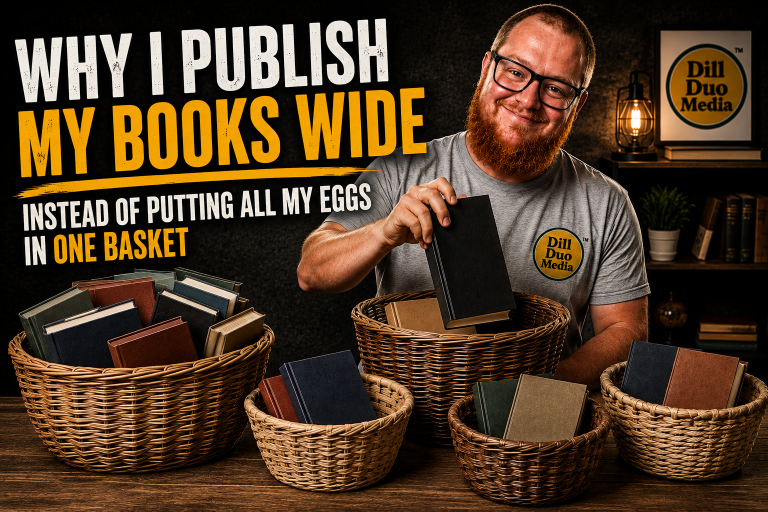
I recently wrote Why I Publish My Books Wide Instead of Putting All My Eggs in One Basket.
So how can I say I don’t want to depend on one platform while also saying I don’t need to be everywhere?
Because those aren’t opposite ideas.
They’re boundaries on the same problem.
I don’t want one company to have so much control over a part of my business that losing that company destroys the whole thing.
But I also don’t need twelve alternatives just to prove I’m diversified.
There is a middle ground.
Maybe I need two strong channels.
Maybe three.
Maybe a particular part of the business benefits from more.
Maybe another part only needs one marketplace plus my own website.
The number isn’t the point.
The point is having enough diversification to reduce unnecessary dependence without creating so much complexity that I can’t manage what I’ve built.
That’s very different from chasing every platform I can find.
Every Platform Has to Earn Its Place
I think about platforms differently now.
The question isn’t:
Can I put my stuff there?
Most of the time, the answer is probably yes.
The better question is:
Why should I?
What does this platform add?
Does it have an audience that makes sense for what I’m selling?
Does it make the product easier for people to find?
Does it provide a type of distribution I don’t already have?
Does it generate enough sales, traffic, visibility, or strategic value to justify maintaining it?
Those are much better questions.
And sometimes the answer won’t be obvious immediately.
That’s okay.
I can test something.
I can give it time.
I can look at what actually happens.
But I don’t want the fact that I created an account to become the reason I keep an account forever.
If something stops making sense, I can reevaluate it.
A Platform Doesn’t Have to Be Huge to Be Worth Keeping
At the same time, I don’t think every platform has to become a major revenue source.
That’s important too.
If one channel produces occasional sales and takes almost no effort to maintain, that can still be useful.
I don’t need every marketplace competing for first place.
The calculation is bigger than raw revenue.
If something makes $100 but takes ten hours of maintenance, that’s different from something that makes $50 and takes almost none.
I’m not saying those numbers represent some universal formula.
I’m saying effort matters.
So does strategic value.
A platform might introduce people to the brand.
It might reach a particular audience.
It might provide useful search visibility.
It might serve customers who strongly prefer shopping there.
That can matter even if it isn’t the biggest line on a revenue report.
But there should still be some reason it’s part of the ecosystem.
Being Everywhere Can Make You Look Like You’re Accomplishing More Than You Are
This is another part I think is easy to fall into.
Setting things up feels productive.
I can spend an entire day creating accounts.
Uploading products.
Building profiles.
Connecting social networks.
Changing banners.
Writing bios.
Organizing storefronts.
At the end of the day, I can look at everything I created and feel like I got a lot done.
And technically, I did.
But did I create anything new?
Did I write another article?
Did I work on another book?
Did I build another curriculum product?
Did I improve something customers actually use?
Did I make the website better?
Did I create something that can earn?
Sometimes the setup work is necessary.
I’m doing plenty of it myself.
But administrative motion can start looking a lot like progress if I’m not careful.
A bigger collection of accounts is not automatically a bigger business.
I Would Rather Build Assets Than Collect Platforms
This is probably the easiest way for me to think about it.
Platforms are places.
Assets are things I own or create.
A book is an asset.
A curriculum product is an asset.
An article is an asset.
A website is an asset.
A useful image is an asset.
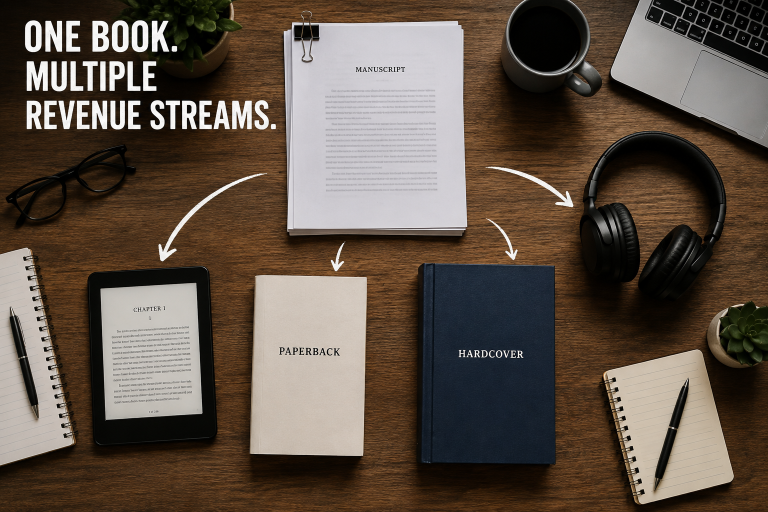
A manuscript is an asset.
Intellectual property is an asset.
A marketplace account gives those assets somewhere to go.
That’s valuable.
But the account itself isn’t the reason the business exists.
If I have three hours available, sometimes the best use of those three hours isn’t adding another place to sell something I’ve already created.
It might be creating the next thing.
That connects directly to Write Your Book Your Way—and Then Write the Next One.
At some point, you have to stop optimizing the last thing long enough to create the next thing.
Otherwise you can spend forever rearranging the same inventory across more and more places.
More Channels Create More Systems
There is also an operational cost to expansion.
Every new channel creates information.
Login information.
Listings.
Images.
Descriptions.
Prices.
Links.
Policies.
Payment schedules.
Customer messages.
Analytics.
Maybe platform-specific file requirements.
Maybe different product categories.
Maybe different formatting.
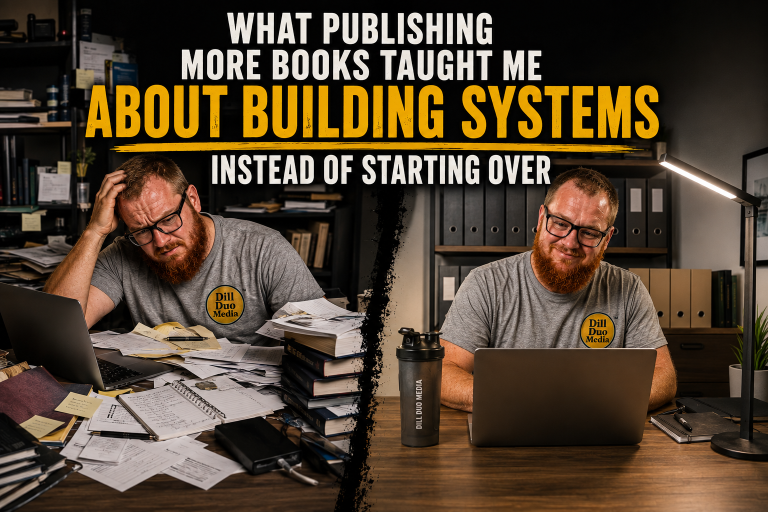
That is why What Publishing More Books Taught Me About Building Systems Instead of Starting Over applies to much more than books.
Once the business expands across different channels, organization becomes part of the cost of expansion.
If I add something new, I need to know how I’m going to manage it.
Otherwise I create another place where information can become outdated or forgotten.
That’s not an argument against expansion.
It’s an argument for expanding deliberately.
Different Parts of the Business Don’t Need the Same Strategy
This is something I think gets lost when people give generic business advice.
What works for books doesn’t necessarily work for curriculum.
What works for curriculum doesn’t necessarily work for resale.
What works for resale doesn’t necessarily work for articles.
They may all exist under Dill Duo Media, but they’re not identical products with identical customers.
Books benefit from being available where readers buy books.
Educational resources benefit from being available where parents and educators look for educational resources.
Resale inventory benefits from marketplaces where people actually shop for secondhand goods.
Articles need readers, search visibility, social discovery, and a strong home on the website.
I don’t need to force all of those into the same distribution strategy.
That’s one advantage of thinking of Dill Duo Media as an ecosystem instead of one product.
Different parts can use different channels while still leading back toward the same larger brand.
My Website Changes the Equation
Having DillDuoMedia.com gives me something I didn’t have when everything existed only on outside platforms.
It gives the ecosystem a home.
I don’t own the marketplaces.
I don’t own social networks.
I don’t control their algorithms.
I don’t control their rules.
I don’t control whether they change tomorrow.
But the website gives me a central place where the different parts of the business can connect.
Books can connect to articles.
Articles can connect to books.
Homeschool content can connect to curriculum resources.
Someone who finds one part of Dill Duo Media can discover another.
That’s different from having six disconnected accounts scattered around the internet.
I still want outside platforms.
They can bring customers, readers, and traffic.
But I increasingly think of them as roads leading into the ecosystem, not as separate versions of the business that each need to become their own world.
That makes deciding where to spend time a little easier.
Social Media Can Become Its Own Full-Time Job
Social media might be the clearest example of why being everywhere can become ridiculous.
There are always more places to post.
And each platform develops its own culture.
Its own format.
Its own algorithm.
Its own preferred image size.
Its own video style.
Its own posting frequency.
Its own audience expectations.
You can easily reach a point where creating content for the business becomes creating content for social media about the business.
Those aren’t always the same thing.
If I spend three hours turning one article into fifteen pieces of platform-specific content, maybe that’s worthwhile.
But I should know why I’m doing it.
Because I could also use those three hours to create another article that can continue bringing people to the website through search.
Or work on another book.
Or build another product.
There is always an opportunity cost.
The fact that everyone else seems to be posting somewhere doesn’t automatically make that the best use of my time.
I Don’t Need to Chase Every New Thing
There’s always going to be a new thing.
A new marketplace.
A new app.
A new social network.
A new business tool.
A new AI platform.
A new strategy somebody says is changing everything.
Some of those things will actually matter.
Most won’t matter equally to me.
I don’t need to be first just because something exists.
Sometimes being early creates an advantage.
Sometimes being early means spending six months building on something that disappears.
I can watch.
I can evaluate.
I can test.
I can wait until there’s a reason.
That’s not falling behind.
That’s deciding what deserves attention.
Saying No Can Be a Business Strategy
People talk constantly about finding opportunities.
There’s less conversation about rejecting them.
But I think saying no becomes more important as a business grows.
At the beginning, you may need opportunities.
Later, opportunities start competing with each other.
If I say yes to one thing, I’m usually saying no to something else with the time it takes.
That’s true even when no money changes hands.
If I spend tonight building another storefront, I’m not writing tonight.
If I spend tomorrow learning another platform, I’m not working on another product during that time.
If I spend an hour maintaining something that isn’t contributing anything meaningful, that hour is gone.
So sometimes the best business decision isn’t adding something.
It’s protecting the things that are already working.
I Want Enough, Not Everything
I think that’s the balance I’m trying to build.
Enough distribution that I’m not unnecessarily dependent on one company.
Enough marketplaces to reach the customers who make sense.
Enough social presence to give people ways to discover and follow Dill Duo Media.
Enough systems to keep everything manageable.
Enough experimentation to discover new opportunities.
But not so much that maintaining the infrastructure consumes the business.
That is the line I’m trying to find.
And I’m sure the line will move.
Something that isn’t worth my time today might become worthwhile later.
Something useful today might stop being useful.
That’s normal.
The business doesn’t need a permanent list of platforms.
It needs a reason for using the ones it’s using.
More Isn’t Always Growth
One of the easiest things in business is adding.
Another product.
Another platform.
Another account.
Another tool.
Another subscription.
Another project.
Another idea.
The harder skill is figuring out what deserves to stay.
Because growth isn’t just having more things.
Sometimes growth is making the things you already have work better.
Sometimes it’s creating the next asset instead of creating another account for the last one.
Sometimes it’s building a system.
Sometimes it’s improving the website.
Sometimes it’s leaving something alone because it’s already doing its job.
And sometimes it’s deciding that an opportunity isn’t worth the time it would take away from everything else.
I’m still going to try new things.
I’m still going to distribute my work in more than one place.
I’m still going to test marketplaces and platforms when I see a reason.
But I don’t need Dill Duo Media everywhere.
I need Dill Duo Media in the places that actually help me build Dill Duo Media.
There’s a difference.
And the bigger the ecosystem gets, the more important that difference becomes.