
By Christopher Dill
There is a point where writing a book can stop being about the book and start becoming about everybody else’s reaction to it.
Will people buy it? Will they like it? Is the idea marketable enough? Does it sound like something a successful author would write? Is the title right? Is the genre right? Is this the book that is finally going to take off?
Those questions can become so loud that the reason you wanted to write in the first place gets buried underneath them.
I think there is a simpler place to start: write your book your way.
Take the idea that’s been sitting in your head and put it somewhere. Build on it. Add another idea to it. Figure out what you actually want to say.
If it’s fiction, tell the story you want to tell. If it’s nonfiction, make the argument you actually believe.
Make the finished book something you can look at and say, yes, that’s what I wanted this to be.
Then put it out there.
The world may love it. The world may barely notice it. Either way, you wrote the book.
And then you can write another one.
Big Authors Can Distort What Success Looks Like
Writers see the biggest names in publishing constantly.
We see authors whose books are everywhere, whose new releases arrive with enormous audiences already waiting, whose names are sometimes printed larger than the titles themselves.
There is nothing wrong with wanting that kind of success.
The problem comes when you use the top of somebody else’s career as the starting line for yours.
Most writers are not going to publish one book and immediately become a household name. Most books aren’t going to become cultural events.
That doesn’t make the book worthless, and it doesn’t make the writer a failure.
If you compare every early sale, every quiet launch, and every small audience to the biggest authors in the world, almost anything you accomplish can start to feel small.
I don’t think that’s a useful way to build a writing life.
I’d rather look at the work in front of me.
Did I finish it?
Am I proud of it?
Did I improve something from the last book?
Did I get another idea out of my head and into a form somebody else can actually read?
Those are things I can control.
Your First Book Doesn’t Have to Carry Your Entire Writing Career
One of the easiest traps to fall into is treating the first book like it has to prove everything.
It has to sell. It has to establish you. It has to find an audience. It has to justify all the hours you spent writing it. It has to convince you that you should keep going.
That’s a lot of weight to put on one book.
The same thing can happen with the second or third. You keep waiting for one title to give you permission to consider yourself successful.
I don’t want to write that way.
Your first book may not be the one people discover first. Your third might lead somebody back to your first. Your tenth might introduce a reader to everything else you’ve written.
A book you thought would be your strongest seller may sit quietly while another title surprises you.
You don’t control all of that.
What you can control is whether there is another book for somebody to find.
A Catalog Changes the Way You Think About One Sale
Once you have more than one book in the world, something changes.
One sale no longer has to mean everything.
A reader can discover you through different doors.
Somebody may be interested in history. Somebody else may want a parenting book. Another person may prefer fiction. A subject you didn’t expect to connect may be exactly what catches one reader’s attention.
That has been one of the interesting parts of publishing multiple books for me.
I don’t have to sit over one title demanding that it become the book that makes everything work.
I can let each book exist.
I can learn from it, improve the next one, and keep building.
Over time, the catalog itself becomes part of what you’ve created. It represents different ideas, different periods of your thinking, different experiments, and different chances for somebody to discover your work.
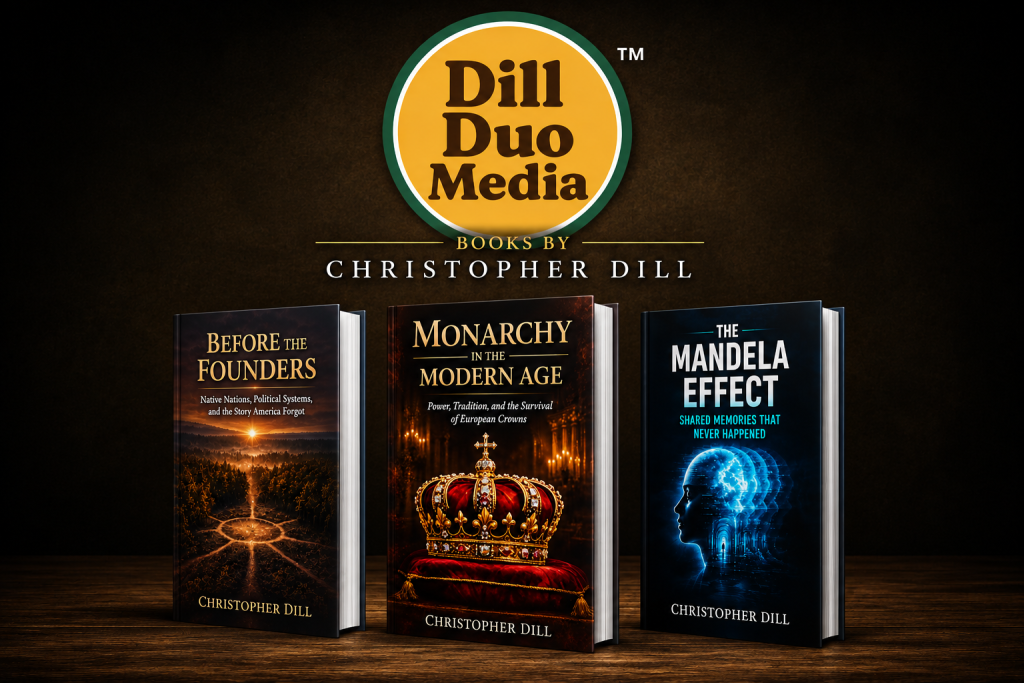
That’s something I’ve experienced firsthand while building my own growing catalog of books.
That doesn’t mean quantity is more important than quality.
It means one book doesn’t have to carry the entire burden of your ambition.
Sometimes the Book You Expect to Sell Isn’t the One That Sells
Publishing has already taught me not to assume I know exactly what readers are going to choose.
You can be especially proud of one project and watch another one get the sale.
You can have a title that seems like it should connect immediately and another that quietly finds a reader somewhere you never expected.
That unpredictability is part of why I don’t want to build my entire identity around the performance of a single book.
If one doesn’t move right away, I don’t need to sit there staring at it and asking what went wrong.
The book is still there.
A reader can discover it tomorrow, six months from now, or years from now.
Meanwhile, I’ve created something else.
I’ve already experienced enough of that unpredictability to know that I can’t always predict what somebody will buy or where a book might eventually end up. I went from wondering whether anybody would buy what I wrote to seeing books reach readers far beyond what I could see from my own desk.
I wrote more about that experience in I Didn’t Know If Anyone Would Buy My Books—Now They’re Sitting on Bookshelves Across the World.
That experience didn’t teach me that every book is going to sell.
It taught me that I don’t necessarily know beforehand which one will.
The Goal Is Not to Stop Caring About Sales
I care whether my books sell.
Of course I do.
I publish them because I want people to read them. I run a business. Sales matter. Royalties matter. Discoverability matters.
I enjoy seeing a new order show up, and I’m not going to pretend otherwise.
But caring about sales and allowing sales to control whether you’re satisfied with your work are two different things.
If the only way a book can make you happy is by selling a certain number of copies, you have handed a large part of your relationship with writing to something you cannot fully control.
I’d rather be proud of the product first.
Then a sale becomes something additional.
Someone chose it.
Someone was interested enough in the title, subject, cover, description, or idea to spend money on something I created.
That’s exciting.
But the book existed before the sale, and I was already proud that I finished it.
There is also a business side to all of this. Once a book exists, I still have decisions to make about how I package it, distribute it, promote it, and price the different editions.
That’s why I’ve also developed my own approach to pricing my books as an indie author without racing to the bottom.
I don’t think caring about the business side cheapens the creative side.
They’re simply different parts of publishing.
Write for the Love of Getting the Idea Out
For me, writing is also a way to get ideas out of my head.
I’ve spent a lot of my life having ideas and then losing them because I trusted myself to remember them.
Once I started saving those thoughts, building on them, and actually turning some of them into finished work, the process became valuable even before anybody bought anything.
There is satisfaction in taking something that only existed in your mind and giving it structure.
An idea becomes notes.
Notes become sections.
Sections become chapters.
Chapters become a book.
Then one day you’re looking at something that didn’t exist until you decided to keep following the thought.
That matters to me.
Even if a particular book never becomes a bestseller, I still got the idea out.
I still built something from it.
I still have a finished piece of work that represents what I wanted to say at that point in my life.
That is not nothing.
You’re Allowed to Write the Book You Want to Read
There can be pressure to reverse-engineer everything around what you think people want.
Sometimes that’s useful.
If you’re publishing commercially, understanding readers isn’t a bad thing. Presentation matters. A good title matters. A clear description matters. Knowing where a book belongs can help the right person find it.
But there is a line where trying to anticipate everybody else’s preferences can drain the personality out of the work.
I don’t want every book I write to feel like it came from a formula.
Sometimes I want to explore something because I’m interested in it.
Sometimes I want to tell a particular story.
Sometimes I have a question, and writing the book is part of how I work through it.
If I like the finished product, I’m willing to put it into the world and see what happens.
I’d rather do that than spend forever trying to manufacture the book I imagine everybody else wants.
Putting It Out There Is Part of the Process
At some point, you have to stop working on the book and let it become a book.
That can be difficult.
When a manuscript stays on your computer, it is protected.
Nobody can dislike it.
Nobody can ignore it.
Nobody can leave a bad review.
Nobody can misunderstand what you were trying to do.
But nobody can read it either.
There is always another sentence you could change. Another paragraph you could tighten. Another chapter you could reconsider.
Eventually, if you believe the book is ready, you have to put it out there.
Not because you’re guaranteed applause.
Because that’s what the work was moving toward.
Publish it.
Let it exist.
Let readers decide what they think.
Then give yourself permission to move forward.
Moving On Doesn’t Mean You Stop Supporting the Old Book
Writing the next book doesn’t mean pretending the previous one never existed.
You can still improve its description. You can talk about it. You can link to it from your website. You can update information when necessary. You can run promotions. You can make it easier for readers to discover. You can also periodically revisit business decisions such as how you’ve priced the book as the market, production costs, or your catalog changes.
Moving on creatively is different from abandoning the business side of a book.
What I don’t want to do is sit creatively frozen because one title hasn’t reached whatever imaginary number I decided would make it successful.
The old book can keep working while I work on the new one.
That’s one of the advantages of publishing.
Once the book exists, it can remain available while your attention moves elsewhere.
You’re allowed to keep building.
The Next Book Teaches You Things the Last One Couldn’t
Every completed project gives you information.
You learn what took too long.
You learn what part of your process worked.
You learn where you overcomplicated something.
You learn how you like to structure chapters.
You learn what you want to do differently next time.
Some lessons only show up because you finished.
Then the next book gives you another chance to apply them.
That’s one reason I like continuing instead of endlessly polishing one project.
You can improve by doing.
The writer who finishes book five has experiences the writer who was endlessly revising book one never got to have.
That doesn’t mean rushing bad work into publication.
It means recognizing when the work is ready enough to stand on its own, releasing it, and allowing the next project to teach you something new.
One Book Can Lead a Reader to Another
A catalog also creates connections that one book by itself can’t create.
A reader can finish one title and wonder what else you’ve written.
Someone who finds you through a nonfiction subject may become curious about another part of your work.
Somebody who likes one book may remember your name when they see another.
Not every reader will follow you across every subject, and they don’t need to.
The point is that each finished book creates another possible entrance.
You aren’t depending on one doorway.
That’s part of what I like about continuing to write. Every book is its own project, but it also becomes part of something larger.
You can see that idea in practice across the different books I’ve published.
They don’t all have to reach the same reader or serve the same purpose to belong to the same body of work.
The individual title matters.
So does the body of work.
A Quiet Book Is Still a Finished Book
I think writers sometimes confuse quiet with failure.
A book comes out and doesn’t immediately generate much attention, so it starts feeling like the whole project was a mistake.
But a quiet book is still a finished book.
It’s still available.
It’s still something you created.
It can still be discovered.
And most importantly, it doesn’t have to prevent you from creating again.
If you genuinely believe the book isn’t good, that’s different.
Learn from it.
Improve.
Fix what should be fixed.
But if you’re proud of the work and the only problem is that the world hasn’t rewarded it quickly enough, I don’t think that’s a reason to stop writing.
The world doesn’t owe us immediate attention.
We don’t owe the world only one attempt.
Don’t Wait for Permission to Call Yourself a Writer
There is always another milestone you can invent.
I’ll feel like a real writer when I finish the manuscript.
Then you finish it.
I’ll feel like a real writer when I publish it.
Then you publish it.
I’ll feel like a real writer when somebody buys it.
Then somebody buys it.
I’ll feel like a real writer when I sell a hundred.
Then the number changes again.
At some point, you have to stop moving the definition.
If you write, finish work, and put that work into the world, you are doing the work of a writer.
You don’t need a bestseller list to validate the hours you spent creating.
Put the Idea on Paper, Then Build
If you’ve been carrying a book idea around for years, start somewhere.
It doesn’t have to begin with Chapter One.
Write the idea down.
Write the scene you can already see.
Write the argument you keep having in your head.
Write the title if that’s all you have.
Then add to it.
One idea can connect to another.
A note can become a page.
A page can become a chapter.
You don’t have to know the entire book on the first day.
You just have to stop requiring your memory to hold the whole thing.
Build it piece by piece.
And when you finally have the book you wanted to create, don’t leave it hidden forever because you’re afraid it won’t perform like somebody else’s.
Put it out there.
Then Write the Next One
This is the part I keep coming back to.
Write your book your way.
Make it something you’re proud of.
Put it into the world.
Care about the sales.
Celebrate them when they happen.
Learn what you can from what readers respond to.
Improve your craft and improve the way you present your work.
But don’t make one book responsible for deciding whether you get to keep writing.
Your first may not be the one.
Your second may not be the one.
Your third may surprise you.
Or maybe there is never one giant breakout title and instead you slowly build a body of work that reaches different people for different reasons.
I think that’s worth building too.
I don’t know which book someone will discover first.
I don’t know which idea will connect with which reader.
I don’t know which title might suddenly find an audience long after I publish it.
What I do know is that none of those possibilities exist if the ideas stay in my head.
So I write them.
I build them.
I put them out there.
And then I move on to the next idea.
Not because the last book didn’t matter.
Because it mattered enough to finish—and the next idea matters enough to begin.